Proud packaging, honestly explained.
Our primary line is plant-based: sugarcane bagasse, cornstarch blends and paper. Here is the science and the law behind it — with every number sourced.
The life of a bagasse plate.
Our primary line starts where sugar production ends. Here is the whole journey — and the part plastic never gets to.
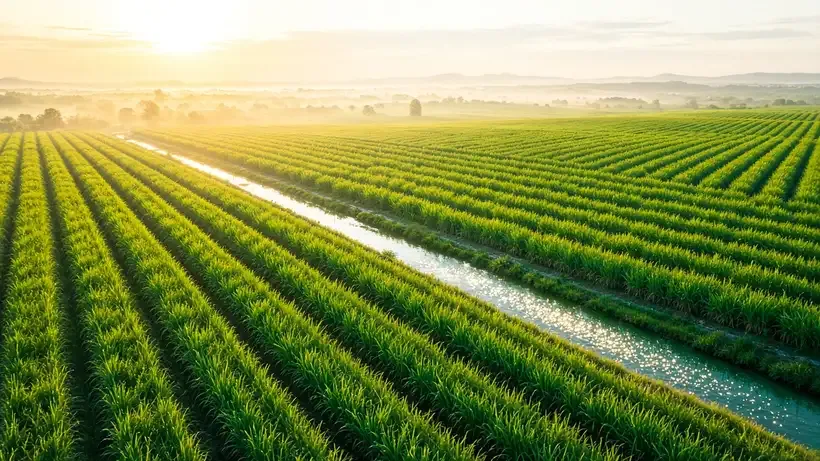
The field
Sugarcane is grown for its juice. Once the juice is pressed out, the fibrous stalk that remains is called bagasse.
Source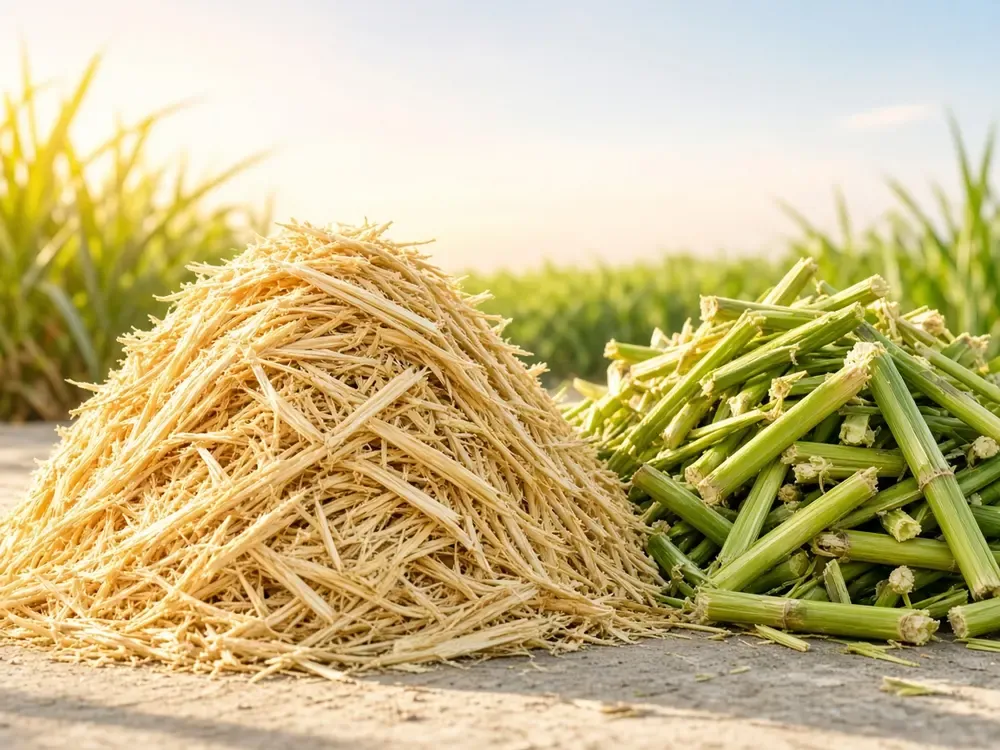
The fibre
That leftover fibre is pulped and cleaned — a by-product becomes a raw material instead of waste.
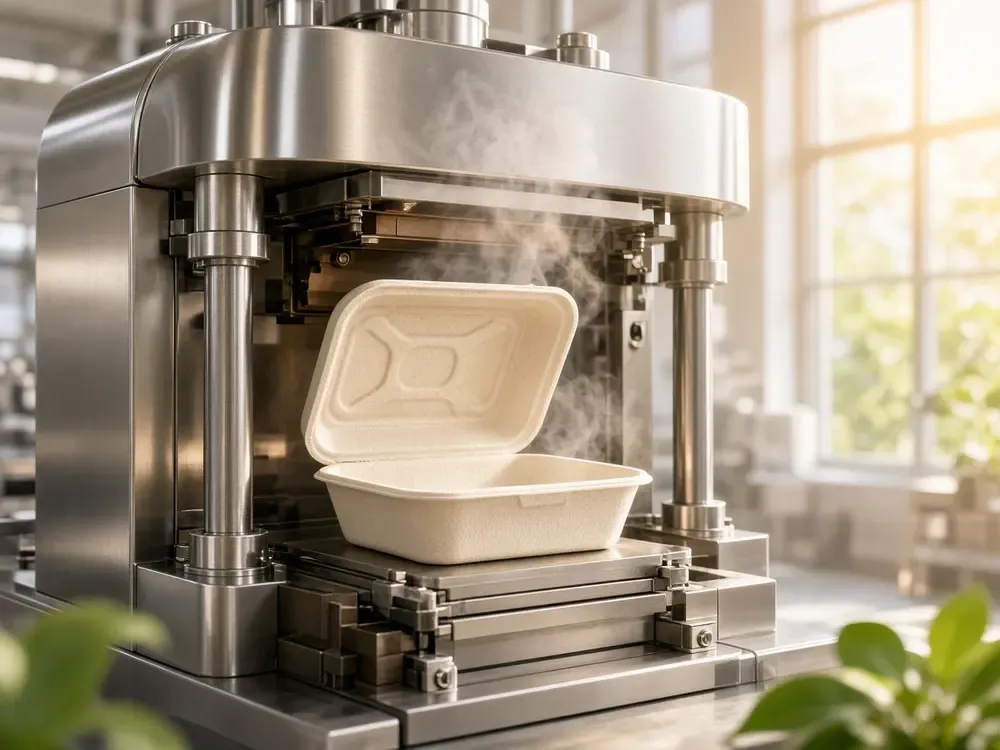
The mould
Heat and pressure in steel moulds form the pulp into plates, bowls, trays and clamshells.
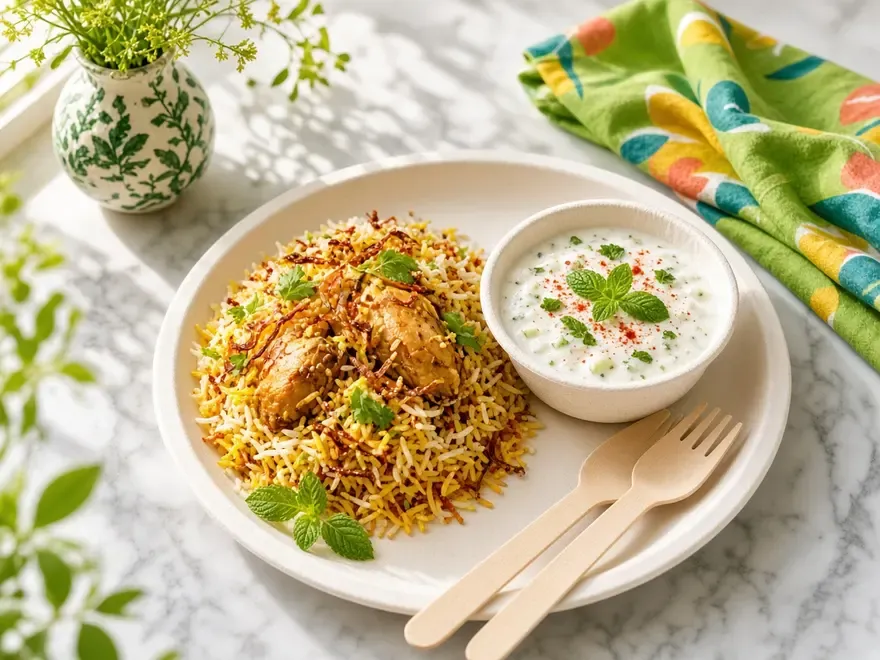
Your table
It carries hot, oily, saucy food — and your brand — from kitchen to customer.
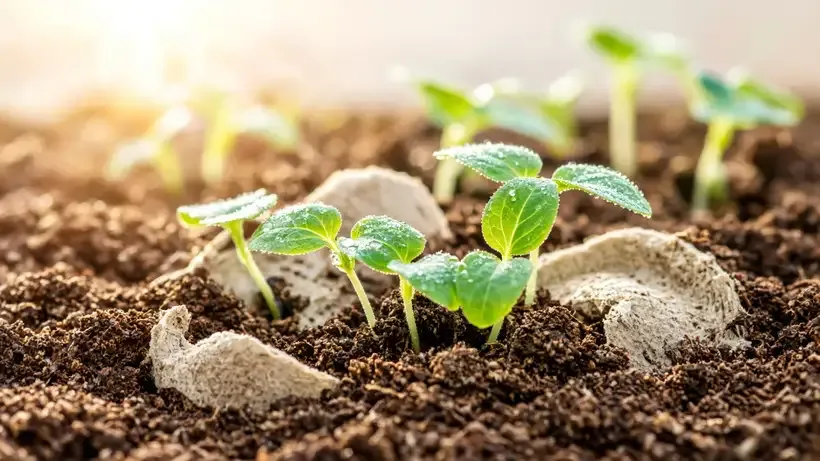
Back to soil
Plant fibre is compostable: in industrial composting it breaks down in weeks to months.
Source


Be proud of what you hand over.
No vague green claims. Here is what the standards, the UN and India’s own rules actually say — and what happens to plant fibre after the meal.
Sources: Encyclopaedia Britannica — bagasse · European Bioplastics — EN 13432 certified bioplastics · ASTM D6400 — compostable plastics specification · TÜV AUSTRIA — OK compost HOME · UNEP — “a thousand years” of plastic pollution · UNEP — Beat Plastic Pollution (9% recycled) · US EPA — impacts of plastic pollution · PIB — single-use plastic items banned from 1 July 2022 · PIB — Plastic Waste Management Amendment Rules, 2021
What “compostable” has to prove
Into the compost
Used plant-fibre packaging goes in with food waste — no washing, no sorting by polymer.
Since 1 July 2022, these are gone.
The Plastic Waste Management Amendment Rules, 2021 prohibit the manufacture, import, stocking, distribution, sale and use of these single-use plastic items across India.
PIB — single-use plastic items banned from 1 July 2022 · PIB — Plastic Waste Management Amendment Rules, 2021
- Plates
- Cups
- Glasses
- Forks, spoons & knives
- Straws
- Trays
- Stirrers
- Sweet-box wrapping film
- Earbud & balloon sticks
- Candy & ice-cream sticks
- Thermocol décor
- Invitation cards
- PVC banners under 100 µm
- Plastic flags
- Cigarette packet film
What we will — and won’t — say.
We will
- Name the material of every product
- Link every environmental statistic to its source
- Tell you when an item is plastic — and which plastic
- Share the specification for your exact use
We won’t
- Call something “certified compostable” without the certificate
- Use vague words like “eco-safe” instead of facts
- Promise breakdown times that depend on your local facilities
- Hide plastic items inside an “eco” label